

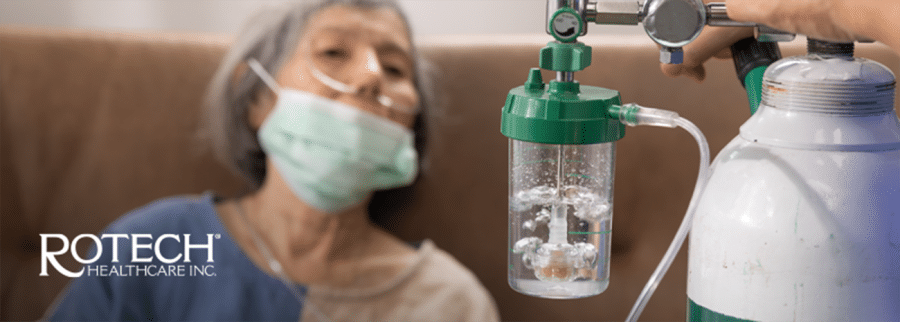
Maybe you have a machine humming in your living room, plus a smaller tank or portable unit by the door for appointments and errands. You might reasonably wonder why you need two pieces of equipment for the same oxygen, and what the difference is between them.
Knowing how your equipment works can help you feel more confident using it at home and on the go. This guide covers the oxygen concentrator vs. oxygen tank question in plain terms. It explains how each one supplies oxygen, how they differ in day-to-day use, and why your healthcare provider may have prescribed the setup you have.
In This Article
- Quick Answer: What’s the Difference?
- What Is an Oxygen Concentrator?
- What Is an Oxygen Tank or Cylinder?
- Oxygen Concentrator vs. Oxygen Tank: Key Differences
- Is an Oxygen Concentrator Better Than an Oxygen Tank?
- Why Might You Be Prescribed More Than One System?
- Power and Backup Planning
- Refills, Supplies, and Maintenance
- Basic Safety Rules for Home Oxygen
- Questions to Ask About Your Equipment
- Can You Switch Systems?
- How Rotech Supports Home Oxygen Therapy
- Frequently Asked Questions
Quick Answer
What’s the Difference Between an Oxygen Concentrator and an Oxygen Tank?
The main difference is where the oxygen comes from. A concentrator draws in room air and produces concentrated oxygen while it has power. A tank, or cylinder, holds a limited supply of stored oxygen. The systems also differ in power needs, portability, storage, and refilling or replacement. Your prescription and daily needs determine which system you use.
What Is an Oxygen Concentrator?
An oxygen concentrator is a medical device that makes oxygen-rich air from the room air around you. It draws in air, removes most of the nitrogen, and delivers concentrated oxygen through tubing and a nasal cannula.
Because it works with the air around you, a concentrator doesn’t run out the same way a tank does. It does need a reliable power source to operate, though.
There are two main kinds:
Home or stationary oxygen concentrators
These larger units plug into a wall outlet. They’re often prescribed for routine use at home, including during sleep if that’s part of your prescription.
Portable oxygen concentrators
These smaller units are designed for use away from home. Depending on the model, they may run on rechargeable batteries, household electricity, or another approved power source.
Portable concentrators aren’t all alike. Models differ in how they deliver oxygen, which settings they offer, and how long their batteries last. Many portable oxygen concentrators provide oxygen in pulses when you breathe in, while some provide a continuous flow or offer both options.
A setting on one device doesn’t necessarily provide the same oxygen output as the same numbered setting on another device. Your healthcare provider and equipment team should confirm that a specific device fits your prescription.
Rotech provides home oxygen therapy, including home oxygen concentrators, portable oxygen systems, and portable oxygen concentrators.
What Is an Oxygen Tank or Cylinder?
An oxygen tank, also called an oxygen cylinder, holds oxygen that has already been produced and stored, usually as compressed gas. It doesn’t produce oxygen from the air.
When the stored supply runs low, the cylinder must be refilled or replaced through the oxygen supplier. The exact process depends on the equipment.
Tanks come in different sizes. Larger cylinders may remain mostly in one place, while smaller cylinders can travel in an appropriate carrier or cart. Some systems use a device that releases oxygen when you breathe in, depending on the equipment and prescription.
How long a tank lasts depends on its size, your prescribed oxygen setting, its delivery device, and how it’s used. That’s why there’s no single answer to how long an oxygen tank lasts. Your equipment team can explain what to expect from your setup.
Oxygen Concentrator vs. Oxygen Tank: Key Differences
| Feature | Oxygen Concentrator | Oxygen Tank or Cylinder |
|---|---|---|
| How oxygen is supplied | Concentrates oxygen from surrounding air | Holds a limited supply of stored oxygen |
| Power requirements | Needs electricity or a charged battery, depending on the model | Usually doesn’t require electricity to release stored oxygen |
| Portability | Home units remain mostly in one place; portable models support mobility | Depends on the cylinder size and carrying system |
| Refills or replacement | Doesn’t require oxygen refills, but portable-unit batteries need charging | Must be refilled or replaced when the supply runs low |
| Noise | Produces some operating noise because it contains powered components | Usually doesn’t produce motor noise |
| Backup planning | Requires planning for outages, charging, and battery operation | Requires monitoring the remaining supply and arranging replacement or refilling |
| Storage | Needs room for airflow around the unit, following manufacturer instructions | Needs secure storage away from heat, flames, and other ignition sources |
| Common role | Often used for routine home oxygen; portable models may support mobility | May support mobility, backup planning, or another prescribed need |
Equipment models, prescriptions, insurance coverage, and local availability vary. This table explains general differences and doesn’t determine which system is appropriate for you.
Is an Oxygen Concentrator Better Than an Oxygen Tank?
Neither system is better for everyone.
A home oxygen concentrator may work well for someone who regularly uses oxygen at home and has reliable access to electricity. A portable oxygen concentrator or smaller oxygen cylinder may support mobility, depending on the prescription.
The appropriate system depends on:
- Your prescribed oxygen setting and delivery method
- When and how often you use oxygen
- Your needs during rest, activity, and sleep
- Power and backup requirements
- Your daily routine and mobility needs
- Coverage and local equipment availability
Your healthcare provider determines your medical oxygen needs. Your equipment team helps make sure the prescribed system is set up and operating correctly.
Why Might Someone Be Prescribed More Than One Oxygen System?
Some people use one system for routine home oxygen and another for mobility, travel, or backup planning.
For example, you may use a home oxygen concentrator for daily use and sleep, plus a portable oxygen system for appointments, errands, or time with family. A second system may also support another need your healthcare provider has identified.
Your oxygen needs may differ during rest, activity, and sleep. The American Thoracic Society’s oxygen-therapy guidance explains that healthcare providers may prescribe different oxygen settings for these situations. Use each system at the setting prescribed for that situation.
Not everyone needs more than one system. What you receive depends on your prescription, routine, coverage, and the equipment available in your area.
If you’re still learning how your equipment fits together, Rotech Healthcare can help explain how to operate and care for the equipment you’ve been prescribed.
What Should You Know About Power and Backup Planning?
Concentrators need power. A home concentrator usually runs on a wall outlet, while a portable concentrator may use a rechargeable battery or another approved power source, depending on the model.
Without electricity or a charged battery, a concentrator can’t produce oxygen.
Oxygen tanks don’t normally require electricity to release stored oxygen, but they hold a limited supply. Once that supply runs low, the cylinder must be refilled or replaced.
Because these systems have different power and supply needs, make a backup plan before you need it. Ask your healthcare provider and oxygen supplier what to do during a power outage, storm, or other emergency.
Your plan should be based on your prescription and equipment rather than a general rule. Rotech Healthcare’s patient resources include information about emergency preparedness and proper equipment use.
What Should You Know About Refills, Supplies, and Maintenance?
Every oxygen system requires some upkeep, but the type of care depends on the equipment.
Make sure you know:
- Whether your system needs cylinder replacement or refilling, battery charging, or another process
- Which supplies you use, such as tubing, nasal cannulas, or filters
- How and when to reorder supplies
- How to clean and care for your equipment using its approved instructions
- Who to call with service or equipment questions
Follow the instructions provided with your equipment rather than a general maintenance schedule. Rotech’s home oxygen resources include patient information and instruction guides for certain oxygen equipment.
What Are the Basic Safety Rules for Home Oxygen?
Oxygen isn’t flammable, but it supports combustion. This means materials may burn more readily in an oxygen-rich environment.
Keep oxygen equipment away from smoking, heat, open flames, and other ignition sources. Store cylinders securely, keep concentrator vents clear, and follow the instructions from your healthcare provider, equipment supplier, and equipment manufacturer.
What Should You Ask About Your Oxygen Equipment?
Bring these questions to your healthcare provider and equipment team:
- Which system am I prescribed to use at home?
- Which equipment should I use when I leave home?
- What oxygen setting has been prescribed for me?
- Do my instructions change during activity or sleep?
- What should I do during a power outage?
- How do I check my battery or cylinder supply?
- Who should I contact about equipment problems?
- How do I reorder supplies?
- What travel or storage instructions apply to my equipment?
The answers will be specific to your prescription and equipment. Write them down and keep them somewhere easy to find. If someone helps with your care, make sure that person knows where the instructions are kept.
Planning a trip? Going on Vacation With a CPAP or Oxygen Concentrator? explains what to confirm before traveling with oxygen equipment.
Can You Switch Between an Oxygen Tank and a Concentrator?
Don’t switch oxygen equipment or change your settings on your own. Different systems may deliver oxygen differently, so the same numbered setting may not provide the same oxygen output across devices.
If your equipment no longer works well with your routine or you think your oxygen needs have changed, talk with your healthcare provider. They can evaluate your symptoms, oxygen needs, and prescription.
For questions about how your prescribed equipment works, contact your Rotech team. We can help you understand your setup, care for your equipment, troubleshoot problems, and determine whether an equipment concern needs additional follow-up.
How Rotech Supports Home Oxygen Therapy
Starting home oxygen therapy can bring up plenty of practical questions. You may wonder where your concentrator should sit, which equipment to use when you leave home, how to check your portable supply, or what to do if an alarm sounds.
When your equipment arrives, our Patient Service Technicians explain how to operate and care for it, review important safety information, and answer questions about your setup. And our support doesn’t end there. You can contact your local Rotech team whenever you need help with equipment operation, alarms, batteries, cylinders, supplies, maintenance, or troubleshooting.
We can help with your equipment, while your healthcare provider manages your prescription and medical care.
Who Should You Call?
- Contact your healthcare provider if your breathing or symptoms change, you have questions about your prescription, or you think your oxygen needs may have changed.
- Contact Rotech if you have questions about your equipment, supplies, maintenance, alarms, service, or troubleshooting.
- Call 911 for severe or quickly worsening breathing trouble or another medical emergency.
You can also explore our respiratory and home medical products and services or review our patient resources for additional equipment information and educational materials.
Frequently Asked Questions About Oxygen Concentrators and Tanks
Is an oxygen concentrator the same as an oxygen tank?
No. An oxygen concentrator produces concentrated oxygen from room air, while an oxygen tank holds a limited supply of stored oxygen.
Is an oxygen concentrator better than an oxygen tank?
No single system is better for everyone. In the oxygen concentrator vs. oxygen tank comparison, the right equipment depends on your prescription, delivery needs, routine, power access, coverage, and local availability.
What’s the difference between a portable oxygen concentrator and an oxygen tank?
A portable oxygen concentrator produces concentrated oxygen from surrounding air while powered. An oxygen tank carries a stored supply and usually doesn’t require electricity to release the oxygen.
Does an oxygen concentrator need electricity?
Yes. Home concentrators usually plug into a wall outlet. Portable oxygen concentrators may use rechargeable batteries, household power, or another approved power source, depending on the model.
Does an oxygen tank need electricity?
An oxygen tank usually doesn’t need electricity to release its stored oxygen. Some attached equipment may use batteries, so follow the instructions for your system.
How long does an oxygen tank last?
There’s no universal answer. Tank duration depends on the cylinder size, prescribed setting, delivery device, and how the oxygen is used. Ask your equipment team about your specific setup.
Can I travel with an oxygen concentrator or tank?
Travel may be possible, but requirements depend on your equipment and type of transportation. Confirm your prescription, equipment needs, battery plan, and carrier requirements before traveling.
Why was I prescribed more than one type of oxygen equipment?
One system may support routine home use, while another supports mobility, travel, backup planning, or another prescribed need. Your healthcare provider can explain how each system fits your care plan.
Can I switch oxygen systems on my own?
No. Talk with your healthcare provider and oxygen equipment team before switching equipment because delivery methods and prescribed settings may differ.
Can I change my oxygen setting if I feel short of breath?
No, not unless your healthcare provider directs you to. Contact your provider if your breathing worsens or you believe your oxygen needs have changed.
Who should I call if my oxygen equipment isn’t working properly?
Contact your oxygen equipment supplier for equipment help. Rotech Healthcare patients can contact their local Rotech location. Contact your healthcare provider about symptoms or treatment concerns, and call 911 for an emergency.
Understand How Your Oxygen Equipment Fits Your Care Plan
The main difference in the oxygen concentrator vs. oxygen tank comparison is that a concentrator produces concentrated oxygen from room air, while a tank stores a limited supply.
Each system fits into a care plan differently, and some people are prescribed both. Understanding what each system does, when to use it, and where to direct questions can help you follow your prescribed home oxygen therapy with more confidence.
Need help with your equipment, supplies, or local service options?